
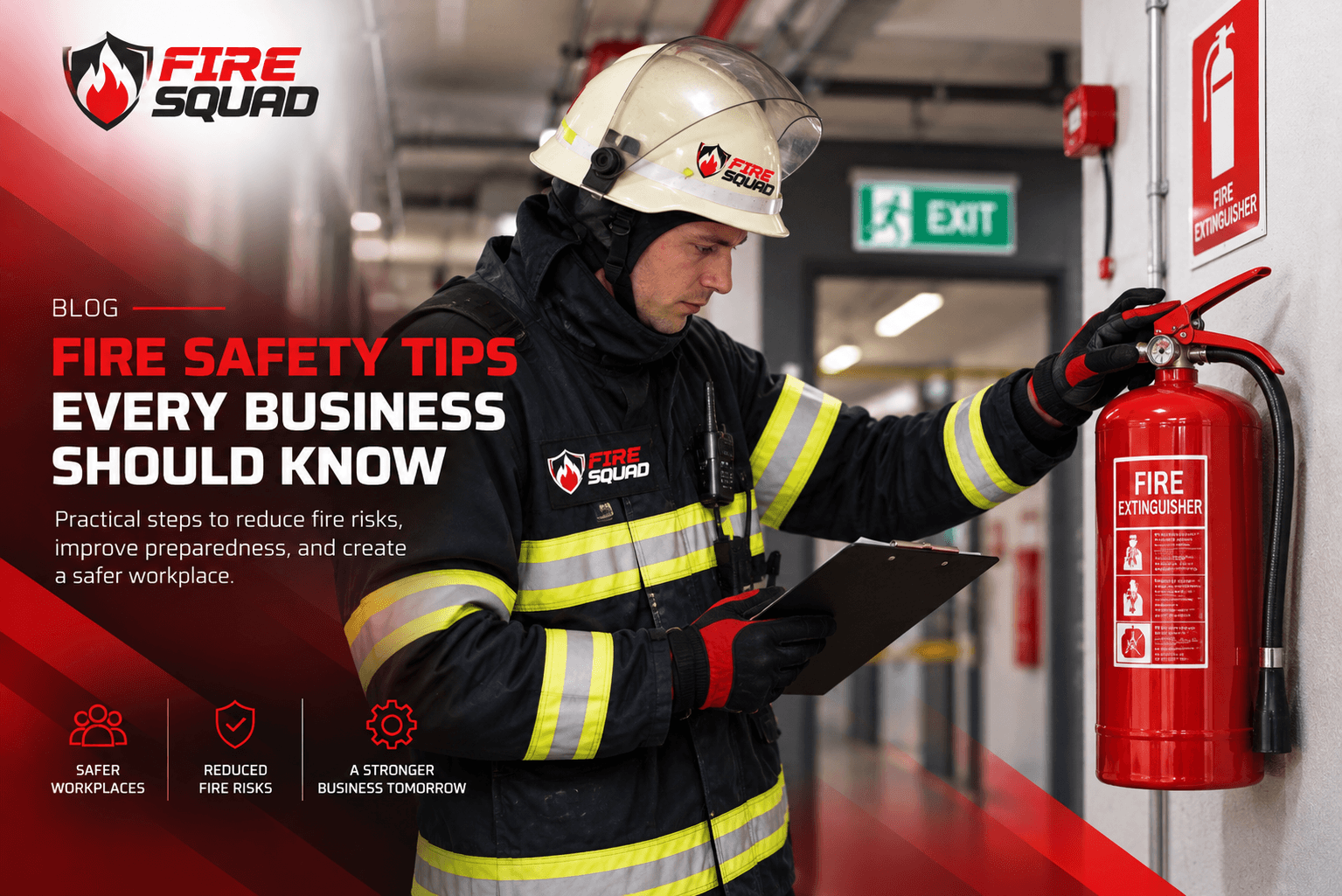
Fire Safety Tips Every Business Should Know
Introduction
Fire safety should be a priority for every business, regardless of its size or industry. A fire can cause serious damage to property, equipment, and business operations, while also putting employees and visitors at risk. The right prevention measures and emergency procedures can significantly reduce these risks.
Identify Potential Fire Hazards
The first step toward better fire safety is identifying potential sources of fire. Electrical equipment, overloaded sockets, flammable materials, heating systems, kitchens, and machinery can all present fire risks. Regular workplace inspections can help identify hazards before they become serious problems.
Install Reliable Fire Protection Systems
Businesses should have appropriate fire protection systems based on their property, operations, and level of risk. Fire alarms, extinguishers, emergency lighting, fire suppression systems, and other safety equipment can provide essential protection during an emergency.
Keep Emergency Exits Accessible
Emergency exits and escape routes should always remain clear and properly marked. Employees should know where the nearest exits are and understand the correct evacuation procedures.
Train Your Employees
Fire safety equipment is only effective when people know how to use it correctly. Regular employee training and fire drills help staff respond quickly and calmly during an emergency.
Schedule Regular Inspections and Maintenance
Fire protection equipment should be inspected and maintained regularly to ensure it remains in working condition. A neglected system may fail when it is needed most.
Conclusion
Effective fire safety combines prevention, reliable equipment, regular maintenance, and proper employee training. By taking a proactive approach, businesses can create a safer environment and better protect their people and property.
Recent Posts